Lao PDR Launches Construction of Wildlife Health and Rehabilitation Centre and Issues Identification Cards for Captive Elephants
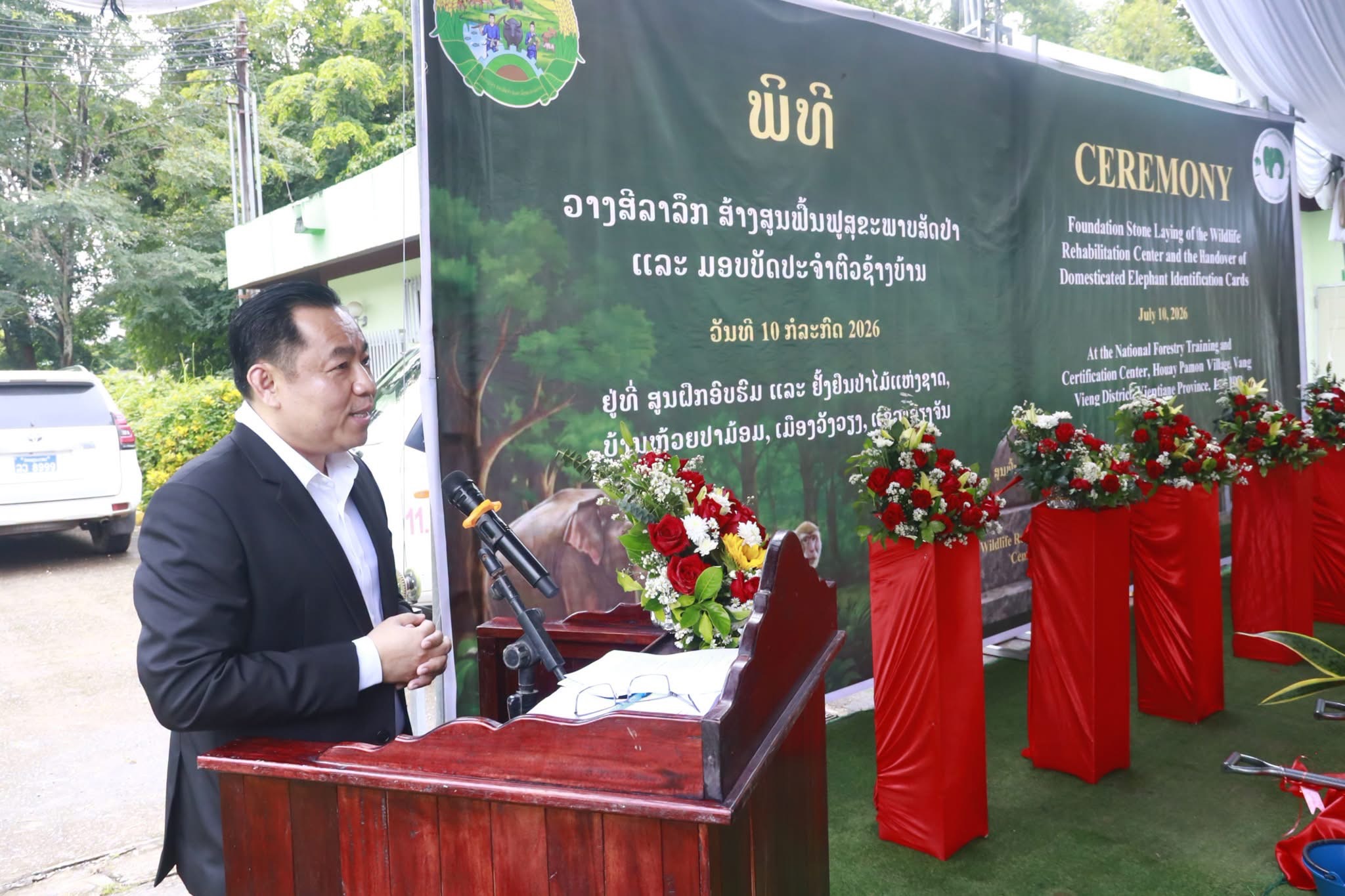
Vientiane Province, Lao PDR, 10 July 2026 — Lao PDR held a foundation-stone-laying ceremony for the construction of a new Wildlife Health and Rehabilitation Centre, together with a ceremony marking the issuance of identification cards for captive elephants.
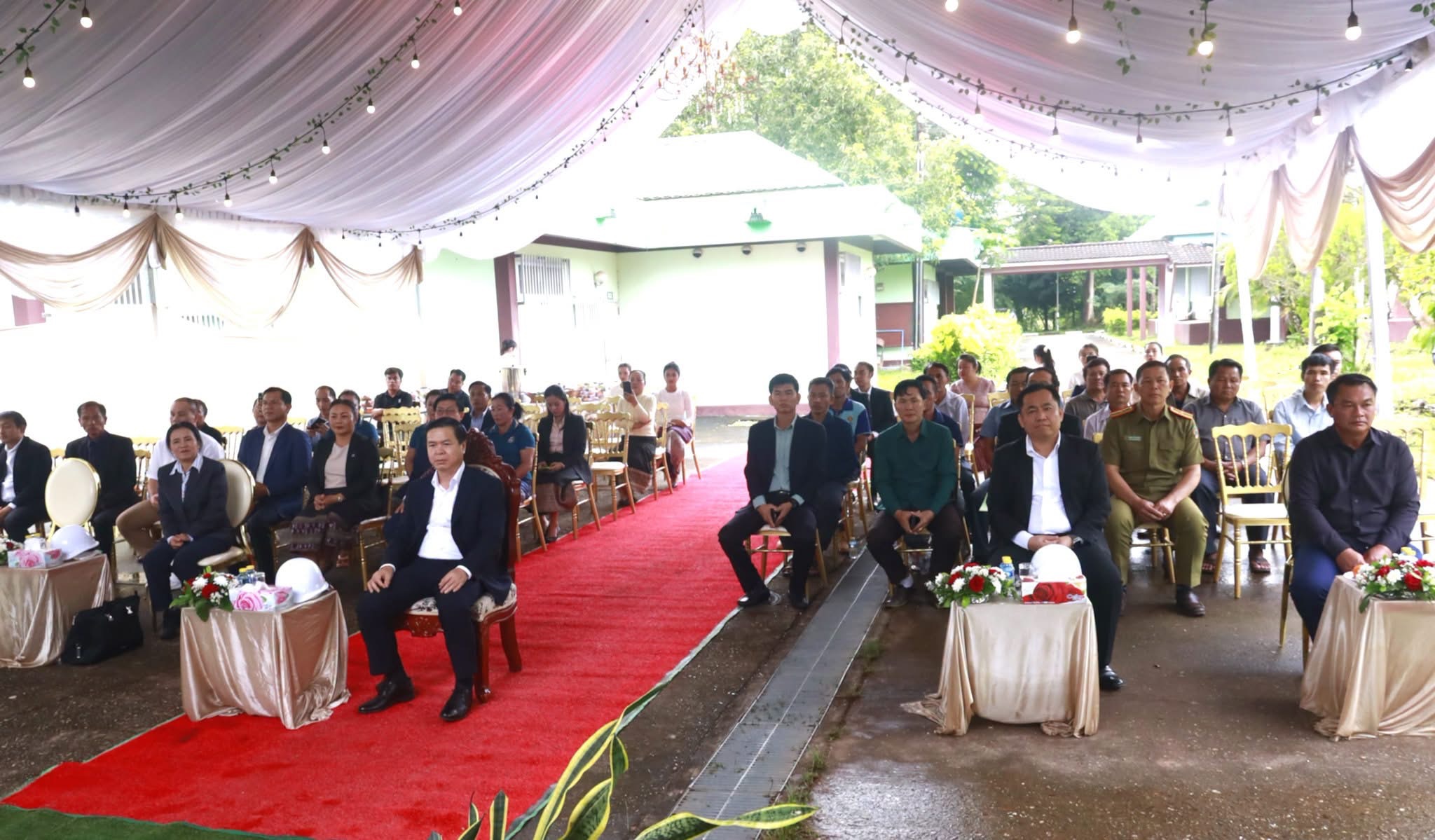
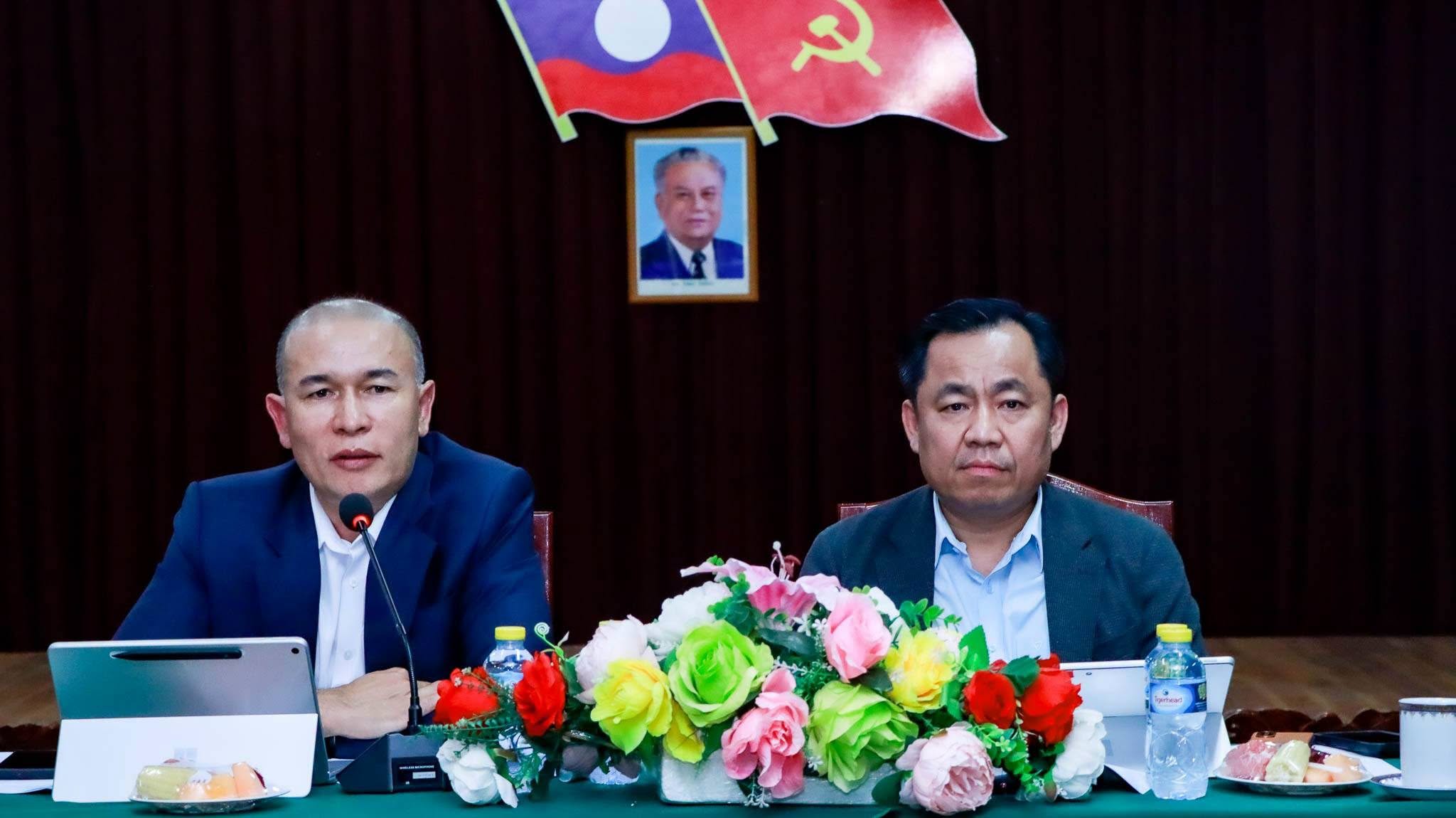
The event took place at the Houay Pamom National Forestry Training and Certification Centre in Vang Vieng District, Vientiane Province. It was presided over by Mr. Kikeo Singnavong, Deputy Minister of Agriculture and Environment, and attended by the Head of the Department of Forestry, the President of the Elephant and Environment Conservation Foundation of Thailand, the Dean of the Faculty of Forest Science, the Head of the Agriculture and Environment Office of Hinheup District, representatives of local authorities and other invited guests.
The Wildlife Health and Rehabilitation Centre is being established to provide Lao PDR with a dedicated national facility for receiving, quarantining, examining, treating, caring for and rehabilitating wildlife that has been seized or confiscated in connection with wildlife-related offences. Particular attention will be given to long-tailed macaques and other animals requiring specialized care and rehabilitation.
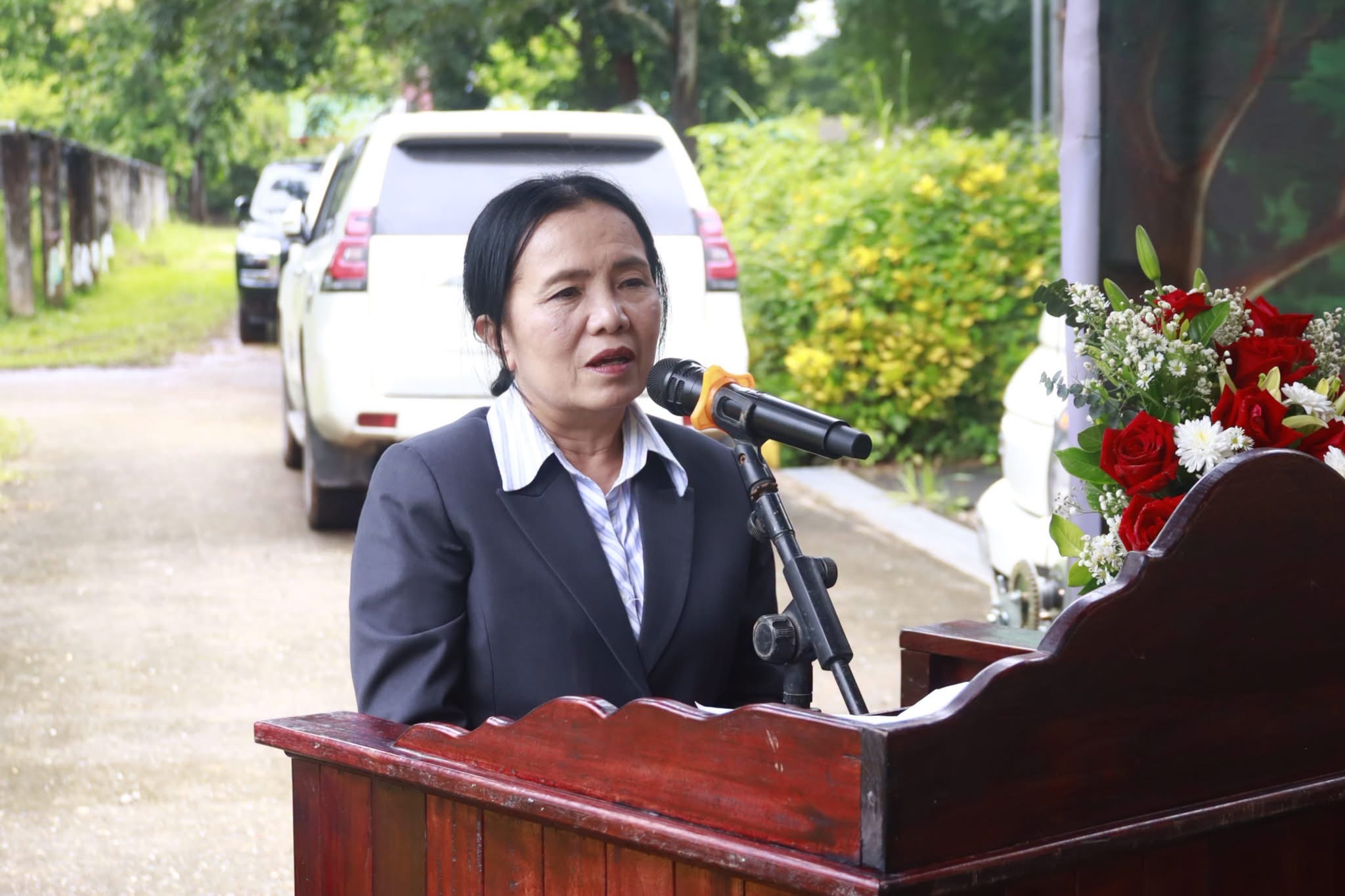
Speaking at the ceremony, Assoc. Prof. Dr. Somvang Phimmavong, Head of the Department of Forestry, stated that the centre would provide Lao PDR with a modern and systematic wildlife care facility designed in accordance with recognized international standards. Its infrastructure will be divided into clearly designated functional areas, including animal reception, disease quarantine, health examination and treatment, rehabilitation and observation, food preparation and animal nutrition, and secure information and records management.
The centre will also include examination and treatment rooms, a surgical room, a pharmacy, a medicine storage facility, a sterilization room and an area for preparing medical instruments. These facilities will support appropriate veterinary treatment, biosecurity, animal welfare and evidence-based wildlife management.
The centre will maintain official records for each animal, including information on its origin, health condition, treatment, movements and management status. This information will support monitoring, verification and the issuance of relevant documentation in accordance with the laws and regulations of Lao PDR, CITES requirements and other applicable international standards.
The centre will be particularly important for ensuring that wildlife seized or confiscated from offenders is managed through a transparent, traceable and accountable national system, with clear documentation maintained throughout the periods of custody, treatment, rehabilitation and subsequent management.
During the event, identification cards for captive elephants were also formally presented. The identification system forms part of Lao PDR’s efforts to modernize the registration and management of captive elephants through standardized individual records, improved traceability and more effective national monitoring.
The system is intended to support the management, inspection, verification and documentation of captive elephants in accordance with national regulations and relevant CITES requirements. It will also strengthen the national database and help prevent illegal ownership, movement and trade in captive elephants.
Construction of the Wildlife Health and Rehabilitation Centre is expected to take approximately one year. The project is being financially and technically supported by the Elephant and Environment Conservation Foundation of Thailand.
At the conclusion of the ceremony, the Deputy Minister of Agriculture and Environment, the Head of the Department of Forestry, the President of the Elephant and Environment Conservation Foundation of Thailand, the Dean of the Faculty of Forest Science and the Head of the Agriculture and Environment Office of Hinheup District jointly cut the ceremonial ribbon to officially commence construction.
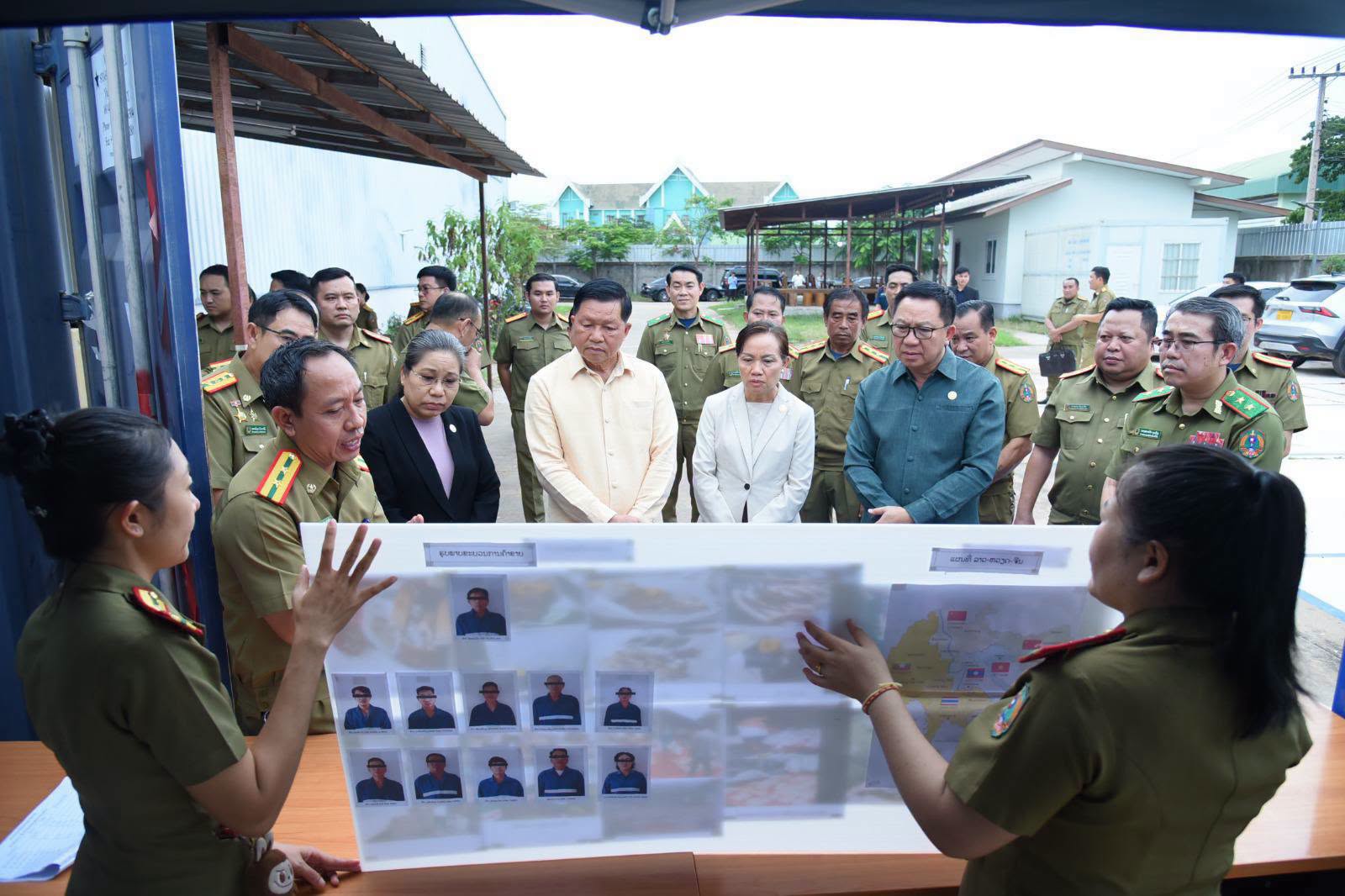
The delegation subsequently visited the proposed construction site and received a briefing on the planned facilities and development arrangements.
The establishment of the centre and the introduction of captive elephant identification cards represent important national steps by Lao PDR to strengthen wildlife health care, animal welfare, traceability and the management of confiscated wildlife. These initiatives also demonstrate Lao PDR’s continued commitment to implementing national wildlife legislation and fulfilling its obligations under CITES.
News and photographs by: Khanvichit
Published by: Information and Communications Technology Division, Cabinet Office, Ministry of Agriculture and Environment